
Learning Arabic is exciting, but beginners often face a key challenge: its writing system differs from English. As you start, you’ll encounter Arabic words in both Arabic script and English letters. This second form is known as transliteration.
Arabic transliteration is a way of representing Arabic pronunciation and spelling using the Latin alphabet. It can help learners understand how an Arabic word sounds before they become comfortable reading Arabic script. However, transliteration is a learning aid, not a replacement for learning the Arabic alphabet.
In this lesson, you will learn what Arabic transliteration is, why it is useful, how Arabic sounds can be represented in English letters, how to transliterate Arabic manually, and how to use online Arabic-to-English transliteration tools.
Video Lesson: Arabic to English Transliteration
At the top of this page, you can watch the accompanying video lesson about Arabic to English transliteration.
In this video, you will learn:
- What is Arabic transliteration?
- What are the main methods of Arabic transliteration?
- How can you transliterate Arabic manually?
- What is the best online Arabic to English transliteration tool?
The video provides a practical introduction to the subject, while this article gives you more detailed explanations, examples, and practice.
For more details on accurate and easy Arabic-to-English transliteration, refer to this detailed guide:
How to Get the Arabic to English Transliteration Accurate and Easy
What Is Arabic Transliteration?
Arabic transliteration means writing Arabic words using Latin letters, the same basic alphabet used by English.
For example:
العربية — al-ʿarabiyya — Arabic
كتاب — kitāb — book
بيت — bayt — house
شمس — shams — sun
While the Arabic word remains original, transliteration provides a pronunciation and spelling guide; however, it’s crucial to understand that transliteration is not the same as translation.
For example:
كتاب — kitāb — book
Here, kitāb is the transliteration, while “book” is the English translation.
Therefore:
Arabic → Transliteration → Translation
كتاب → kitāb → book
Transliteration tells you how an Arabic word can be represented using Latin letters, while translation tells you what the word means in English.
Why Is Arabic Transliteration Useful?
Transliteration can be especially useful when you are beginning to learn Arabic.
First, it can help you pronounce new vocabulary. If you have not yet learned all the Arabic letters, transliteration gives you a way to approach the pronunciation.
For example:
مرحبا — marḥaban — hello
You can use marḥaban to understand approximately how the Arabic word sounds.
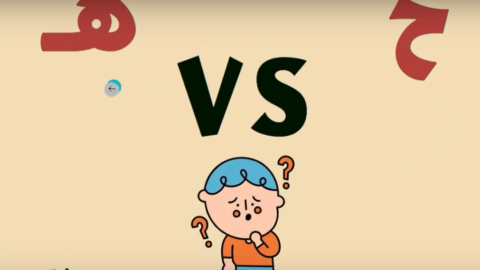
Second, transliteration can help you connect Arabic letters with Arabic sounds. Once you learn that ح is represented as ḥ, for example, you can begin to recognize the difference between ح and ه.
Third, transliteration can be useful when searching for Arabic words online. A learner may remember the sound of a word but not yet know how to type it in Arabic.
Finally, transliteration can help learners compare pronunciation across languages. It gives English-speaking learners a familiar alphabetic system with which to approach Arabic sounds.
Methods of Arabic Transliteration
There is no single universal way to transliterate Arabic. Different systems have been developed for different purposes.
One method is academic or standardized transliteration. This method tries to represent Arabic letters accurately, often using special symbols such as ʿ, ʾ, ḥ, ṣ, ḍ, ṭ, and ẓ.
Another method is simplified transliteration. It uses ordinary Latin letters whenever possible and is designed to be easier for beginners and general readers.
A third method is informal Arabic chat transliteration, sometimes called Arabizi. It is commonly used in online communication and may use numbers such as 3 and 7 to represent Arabic sounds.
For example:
عربي — ʿarabī
may appear informally as:
3arabi
The method you choose depends on your purpose. If you are studying Arabic seriously, a more systematic transliteration system is generally more useful because it preserves more information about the original Arabic spelling.
How to Transliterate Arabic Manually
You do not always need an online tool to transliterate Arabic. Once you understand the basic relationships between Arabic letters and Latin letters, you can transliterate many words manually.
Start by identifying each Arabic letter.
For example:
ك — k
ت — t
ا — ā
ب — b
Therefore:
كتاب → kitāb
The same process can be applied to simple words:
بيت → bayt
شمس → shams
قمر → qamar
نور → nūr
As you become more familiar with Arabic letters, you will gradually be able to transliterate words without checking a chart every time.
However, manual transliteration requires more than simply replacing Arabic letters with English letters. You also need to recognize short vowels, long vowels, hamza, and special Arabic consonants.
Common Arabic Letters and Their Transliteration
Here are some common Arabic letters and their usual transliteration forms:
| Arabic | Transliteration | Example |
|---|---|---|
| ب | b | باب — bāb |
| ت | t | تمر — tamr |
| ج | j | جبل — jabal |
| د | d | دار — dār |
| ر | r | رجل — rajul |
| ز | z | زيت — zayt |
| س | s | سمك — samak |
| ش | sh | شمس — shams |
| ف | f | فم — fam |
| ك | k | كتاب — kitāb |
| ل | l | ليل — layl |
| م | m | ماء — māʾ |
| ن | n | نور — nūr |
| ه | h | هواء — hawāʾ |
| و | w | ولد — walad |
| ي | y | يد — yad |
Notice that some Arabic letters have straightforward English equivalents, while others require special symbols or combinations of letters.
Arabic Long Vowels in Transliteration
Arabic has three basic long vowels:
ا — ā
و — ū
ي — ī
These symbols are useful because they show that the vowel is long.
For example:
باب — bāb — door
بيت — bayt — house
نور — nūr — light
مدينة — madīna — city
The line above a vowel, such as the ā in bāb, indicates a long vowel.
Short vowels are usually represented as:
َ — a
ِ — i
ُ — u
For example:
كَتَبَ — kataba — he wrote
كُتِبَ — kutiba — it was written
Learning the difference between short and long vowels is an important part of accurate Arabic pronunciation and transliteration.
How Are Difficult Arabic Sounds Written?
Some Arabic sounds require special transliteration symbols because they do not have exact equivalents in standard English.
For example:
ح → ḥ
خ → kh
ع → ʿ
غ → gh
ص → ṣ
ض → ḍ
ط → ṭ
ظ → ẓ
These symbols help distinguish Arabic sounds that ordinary English letters cannot represent accurately.
The Arabic Letter ع
The Arabic letter ع is one of the most difficult sounds for beginners.
It is commonly represented by:
ع — ʿ
For example:
عربي — ʿarabī — Arabic
علم — ʿilm — knowledge
عين — ʿayn — eye
The symbol ʿ does not represent an ordinary English sound. It reminds the learner that the Arabic letter ع is present.
The Arabic Letter ح
The letter ح is commonly represented as:
ح — ḥ
Examples:
حبيب — ḥabīb — beloved
حياة — ḥayāh — life
حليب — ḥalīb — milk
The dot underneath the h distinguishes ḥ from the ordinary English h.
Compare:
ه — h
ح — ḥ
These are two different Arabic sounds.
The Arabic Letter خ
The letter خ is commonly written:
خ — kh
Examples:
خبز — khubz — bread
خالد — Khālid — Khalid
خمس — khams — five
The sound is similar to the sound found in the Scottish pronunciation of “loch.”
The Arabic Letter غ
The letter غ is commonly represented as:
غ — gh
Examples:
غرفة — ghurfa — room
غالي — ghālī — expensive
غريب — gharīb — strange
This sound is different from the English “g” in “go.”
What About Hamza?
Hamza is an important Arabic sound and can appear in several forms.
It is commonly represented in transliteration by an apostrophe-like symbol:
ء — ʾ
For example:
ماء — māʾ — water
شيء — shayʾ — thing
سؤال — suʾāl — question
The symbol ʾ indicates the presence of hamza.
This is different from ع, which is commonly represented by ʿ.
A useful distinction is:
ء — ʾ
ع — ʿ
Although the two symbols may look unusual to beginners, they represent different Arabic sounds.
Why Do You Sometimes See Different Transliterations?
Arabic does not have only one universal transliteration system.
The same Arabic word may therefore appear in different forms.
For example:
محمد — Muḥammad
You may also see simplified forms such as “Muhammad” or “Mohammed.”
Likewise:
علي — ʿAlī
may appear as “Ali.”
Different forms do not necessarily mean that one person is using the wrong word. They may simply be following different transliteration conventions.
Academic transliteration tries to represent Arabic letters and sounds more precisely. Informal transliteration usually tries to make Arabic words easier for English speakers to read.
For beginners, this difference is important. You should not assume that every transliteration follows exactly the same rules.
Formal vs. Informal Transliteration
Arabic transliteration can generally be divided into formal and informal approaches.
Formal transliteration attempts to represent the Arabic spelling accurately. It may use symbols such as ʿ, ʾ, ṣ, ḍ, ṭ, and ẓ.
Informal transliteration is often designed for everyday communication. It may avoid special symbols and use familiar English letters instead.
For example:
عربي
Formal: ʿarabī
Informal: “arabi”
The formal version provides more information about the original Arabic spelling. The informal version may be easier for someone who does not know transliteration symbols.
Arabic Chat Alphabet and Numbers
You may also encounter another type of Arabic transliteration on social media and messaging apps. Some Arabic speakers use numbers to represent Arabic sounds that are difficult to write using English letters.
For example:
ع may be written as 3
ح may be written as 7
خ may be written as 5 or kh
غ may be written as 8 or gh
This system is often called Arabizi or the Arabic chat alphabet.
For example:
مرحبا
can sometimes appear as:
mar7aba
This system is useful for understanding informal online communication, but it is different from standardized Arabic transliteration.
If your goal is to learn Arabic properly, you should learn the Arabic script rather than depending on Arabizi.
What Is the Best Online Arabic to English Transliteration Tool?
If you need to transliterate a large amount of Arabic text or want to check your manual transliteration, an online Arabic-to-English transliteration tool can save time.
There are several tools available online, and they do not necessarily use exactly the same transliteration system.
Some popular options include:
- Online Arabic to English Transliteration — ArabicAlphabet.net
- Arabic Transliteration — Online Romanization — Latin Script — LEXILOGOS
- Transliterating Arabic to English in One Step — Steve Morse
- Arabic Converter — Romanization Transliteration — MyLanguages.org
For a convenient Arabic-to-English transliteration experience, the recommended online tool for this lesson is:
Arabic to English Transliteration Tool — ArabicAlphabet.net
You can enter Arabic text and use the generated Latin-script version as a reference while studying pronunciation and spelling.
Remember, however, that an automatic transliteration tool is not a substitute for understanding Arabic pronunciation. Computer-generated transliteration can be useful, but learners should still check difficult words and understand the transliteration system being used.
Google Transliteration and Arabic
Google also provides tools that can help learners work with Arabic text: Google Translate
Google Translate can be useful when you need to translate Arabic into English, and its Arabic input features can also help users type Arabic. However, translation and transliteration are different tasks.
If you want to know what an Arabic word means, you need translation.
If you want to represent the Arabic word using Latin letters, you need transliteration.
For example:
كتاب → kitāb → book
Here:
kitāb = transliteration
“book” = translation
Keeping this distinction in mind will help you choose the right tool.
Should Beginners Learn Transliteration First?
Transliteration can be helpful at the beginning, but it should not become a permanent substitute for Arabic script.
A good approach is to study Arabic words in three forms:
Arabic → Transliteration → English
For example:
كتاب → kitāb → book
This allows you to connect the Arabic spelling, pronunciation, and meaning.
After you become familiar with the Arabic alphabet, gradually reduce your dependence on transliteration.
For example, instead of reading:
shams → sun
train yourself to recognize:
شمس → sun
Then eventually, you should be able to read شمس directly without needing the transliteration.
Common Mistakes with Arabic Transliteration
One common mistake is assuming that transliteration is English pronunciation.
For example, khubz does not mean that every English speaker will pronounce the Arabic خ exactly correctly. Transliteration is an approximation that helps represent the Arabic word using Latin letters.
Another mistake is ignoring long vowels.
There is a difference between:
kitāb
and
kitab
The first form clearly shows the long ā.
A third mistake is treating different transliteration systems as if they were contradictory. Different systems may use different symbols while referring to the same Arabic word.
Finally, beginners sometimes use transliteration without learning Arabic letters. This can make pronunciation and reading progress slower in the long term.
A Simple Transliteration Practice Exercise
Try reading the following Arabic words using their transliterations:
- كتاب — kitāb — book
- بيت — bayt — house
- شمس — shams — sun
- قمر — qamar — moon
- ماء — māʾ — water
- خبز — khubz — bread
- حليب — ḥalīb — milk
- عربي — ʿarabī — Arabic
Now try the reverse exercise. Look at the transliteration and identify the Arabic word:
bayt → بيت
shams → شمس
qamar → قمر
māʾ → ماء
khubz → خبز
This exercise helps you build a connection between Arabic letters and pronunciation.
Transliteration vs. Translation: Remember the Difference
The easiest way to remember the difference is:
Arabic script = how the word is written
Transliteration = how the word can be represented using Latin letters
Translation = what the word means in English
For example:
صباح الخير — ṣabāḥ al-khayr — good morning
Here, صباح الخير is the Arabic expression, ṣabāḥ al-khayr is the transliteration, and “good morning” is the translation.
Keeping these three concepts separate will make Arabic vocabulary much easier to understand.
Final Tips for Using Arabic Transliteration
Transliteration is a useful bridge between English and Arabic, especially during the early stages of learning. It can help you pronounce unfamiliar words, recognize difficult sounds, and remember vocabulary.
However, Arabic transliteration has limitations. English letters cannot perfectly represent every Arabic sound, and different transliteration systems may use different symbols.
For the best results, use transliteration as a temporary learning aid while continuing to learn the Arabic alphabet. Pay particular attention to sounds such as ʿ, ḥ, kh, gh, ṣ, ḍ, ṭ, and ẓ, as well as long vowels such as ā, ī, and ū.
If you need to transliterate Arabic manually, learn the basic letter-to-symbol relationships and practice with short words. If you need to transliterate larger amounts of text, an online tool can make the process faster, but it is still important to understand what the resulting transliteration represents.
The ultimate goal is to move from:
Arabic → transliteration → English meaning
to:
Arabic → English meaning
Once you can read Arabic directly, transliteration becomes a helpful reference rather than something you need for every word.






Thank you a lot for giving everyone remarkably marvellous chance to read from this website. It is usually very nice and also stuffed with a lot of fun for me and my office fellow workers to visit your web site on the least thrice in 7 days to read the new guidance you will have. And of course, we are certainly impressed with all the sensational inspiring ideas you serve. Selected two points in this posting are unequivocally the most beneficial we’ve ever had.